
Guiding with Courtesy
We began with a clear objective: to provide every visitor with a positive, stress-free experience.
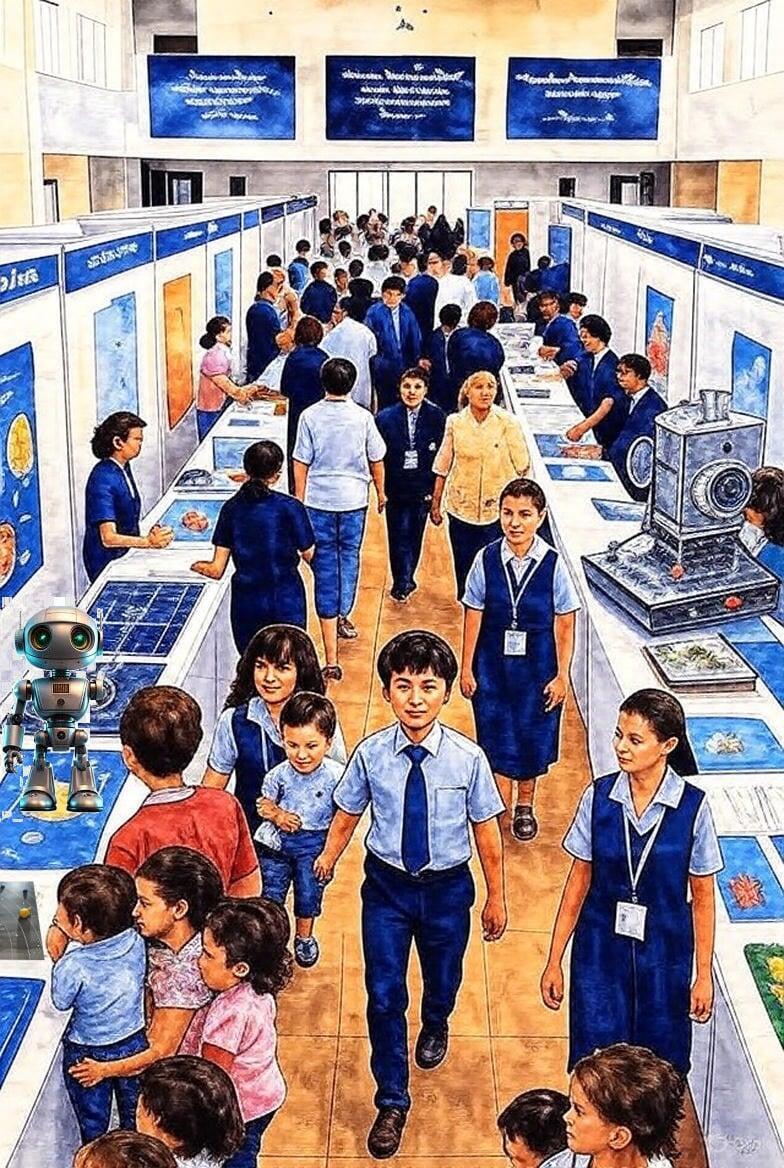
The science exhibition in February every year at Murali's school was famous, drawing visitors from all around.
The sun shone hot over the school yard. The big science fair turned the whole school into a fun place full of surprises. Under tall trees with red flowers falling like rain, kids set up tables with bubbly volcanoes, tiny cars that run on sun power, and spinning planet models that glow like magic. The air smelled like sour juice from the volcanoes, fresh batteries, and sweet ice pops from the snack uncle under his colorful umbrella. Speakers boomed with news.
Student volunteers usually handled guiding the crowds, with ten captains each leading a team of ten helpers. The physical education teacher oversaw everything. That year, Murali was selected as a captain. The three-day event saw attendance far exceeding expectations, straining both volunteers and staff. In certain sections, tensions escalated into verbal disputes between guides and guests. By contrast, the zones assigned to Murali’s team remained orderly and serene, with no incidents of conflict.
At dusk, the courtyard lamps flickered on, casting golden pools across the exhibits. Mrs. Lakshmi, the principal, convened the debrief in the auditorium, aimed at refining operations for the remaining days. Physical Education teacher opened the discussion: “Let us first recognize outstanding performance. Murali’s sector recorded zero disputes. The atmosphere was consistently courteous and composed.”. A loud applause.
Mrs. Lakshmi, seated on the dais beneath a portrait of the school founder, commended Murali and beckoned him forward “Share your method, Murali”.
“There was no secret formula, ma’am,” Murali replied. “We began with a clear objective: to provide every visitor with a positive, stress-free experience. In our initial team meeting, we defined courtesy as the cornerstone of that objective.”
“Excellent,” the principal responded. “How was this implemented?”
“We established a three-phase protocol,” Murali explained: "First, greet each visitor with eye contact, a slight bow, and the phrase, 'Welcome to the World of Wonders', next, accompany guests at their side, speaking calmly regardless of ambient noise, and tailor explanations to their interests and finally conclude the visit with the words, 'Thank you for joining us—please proceed safely to the next exhibit,' along with an open-palm gesture.
Then the physical education teacher inquired about crowd-control measures. Murali continued, “We anticipated high density and rehearsed responses to common irritants—obstructed views, impatient parents, or fatigue. For instance, if a child could not see a demonstration, a team member was trained to offer, ‘May I briefly lift your child for a clearer view?’ We limited such interventions to thirty seconds to maintain flow.”
"How did you develop these ideas and train your team?" - another student captain asked.
"Buddy, we watched training videos on managing crowds and events. Our computer teacher helped us use the lab to find the best ones. Then we practiced what we learned."
The principal requested a brief demonstration of those videos. Ms. Sonia, the computer teacher, projected the selected clips on the auditorium screen. Murali provided concise commentary, illustrating adaptations for the school context. The presentation concluded to sustained applause.
Mrs. Lakshmi directed that all captains adopt the protocol by the following morning and scheduled Murali to conduct early briefings for each team. The subsequent two days witnessed a marked improvement in visitor experience across the exhibition. One parent, initially frustrated on the opening day, returned on the final afternoon to express gratitude and present a token of appreciation.
***
Life-Skills Introduced in This Chapter
Leadership and Goal-Setting: Leading a team by setting clear goals, like creating a polite experience, and discussing ways to achieve them.
Preparation and Planning: Anticipating challenges, such as crowds, and preparing strategies in advance to handle them effectively.
Learning from Resources: Using educational tools, like videos, to gain skills in areas like crowd management and applying them through practice.
Courtesy and Conflict Resolution: Staying polite to calm upset people and turn potentially noisy situations into positive ones.
Sharing Knowledge: Presenting ideas and experiences to others, like explaining training methods, to help the group improve together.