
The Finders and Fixers
As the teams walked along winding paths, the morning world came alive around them. A gentle breeze whispered through tall green trees, carrying the sweet scent of wild flowers blooming in soft pink and yellow clusters.
The sun was still hiding when the first bell tinkled across the dormitory. “Four o’clock, little explorers!” announced the activity team. Soon, blankets flew like magic carpets, and fifty sleepy smiles lit the dark in two dormitories. Even though they had gone to bed late, the children rose easily. The helpers were ready too. The day began with yoga at 5 a.m., led by Daya—a student who had trained as a yoga instructor—as planned by the teachers. Daya raised her hands and said in a solemn voice, “Breathe in this awesome morning, my dear friends.” An energizing forty minute session followed, leaving everyone feeling strong and awake. At 6 a.m., they enjoyed hot morning tea.
The food team had already planned breakfast and lunch menus with the cooks the night before. They helped out during their free moments between activities.
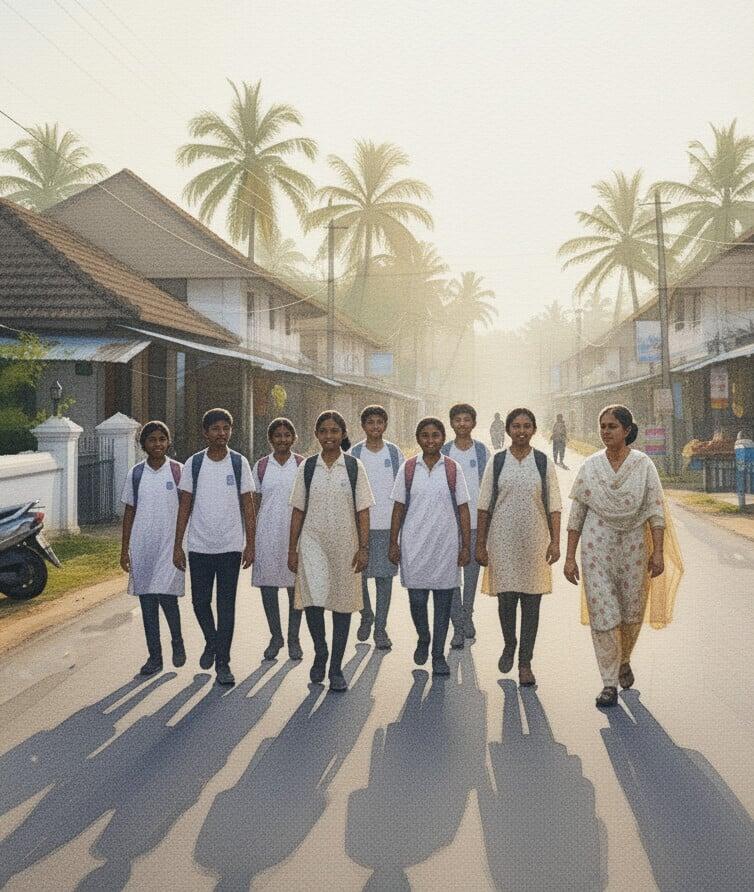
After tea, it was time for the outdoor adventure: "Knowing the Place." This was a fun walk to explore the area around the school, set in a quiet, town-like spot. The children were divided into six teams, each with a guide from the camp staff. Six colorful maps, created with the help of local community members, rolled like treasure scrolls. The goal was clear: each child had to identify at least two special things about the places they visited, two things that needed improvement, and two ideas to make them better.
They set off with lots of energy and sang, “We are the finders, we are the fixers!” Those lines had been created during the previous night’s planning session.
As the teams walked along winding paths, the morning world came alive around them. A gentle breeze whispered through tall green trees, carrying the sweet scent of wild flowers blooming in soft pink and yellow clusters. Dewdrops sparkled like tiny jewels on the grass, and birds chirped happily from branch to branch, as if welcoming the young explorers. The sun peeked over the hills, painting the sky in warm golden light and warming the cool earth under their feet.
Everyone, even the local children, loved discovering new spots! They found homes of people they knew, places of worship, offices, shops, markets, and small businesses. They had never realized their area was so vast, diverse, and beautiful. The paths, streets, and sidewalks offered fresh sights at every turn.
Meera found a primary school whose windows frowned with cracked glass. A replacement was essential. Little Priya waved at Uncle Kunjappan’s tea shop and wrote, “Special: Smells like cardamom heaven.” Manu noted a wobbly bench in the front yard of the Municipal Library. His ideas for improvement were to add more benches and paint them sky-blue, provide shade, and plant flowers nearby to encourage open-air reading!
Another team observed that people were using motor cars and bikes even for short distances. This was not good for the health of the environment or the people. Hence, the Municipal Council should develop campaign plans to promote walking and cycling. Yet another team’s observation was connected to that. People reported that traffic was increasing day by day on municipal roads, but there were not enough walkways and cycling tracks. If walkways and cycling tracks were built, it would improve the health of the people as well as the beauty of the entire municipal area. The team that visited the hilly area demanded a hiking track and periodic trimming of bushes.
By 8 a.m., they were back, quickly bathed, and had breakfast—all on schedule. They were learning how to do things fast and efficiently.
At 9 a.m., everyone gathered in the meeting hall for sharing their observations and ideas. The Municipal Chairperson and two Municipal Councillors had also joined them. The children discussed their findings and suggested improvements. It was eye-opening for the adults! The Municipal Chairperson and Councillors said they received feedback daily, but rarely such deep thoughts and clever suggestions as those shared by the students. The Chairperson promised to use many of the ideas in planning for their municipality.
***
Life-Skills Introduced in This Chapter
Planning Skills: Turning careful observations into clear, useful ideas—such as adding benches, painting them sky-blue, planting flowers, or building walking tracks—shows how to plan real improvements step by step.
Creative Thinking: Making up a cheerful team song (“We are the finders, we are the fixers!”) the night before proves that new ideas can come from fun group planning.
Map-Reading Skills: Using colorful hand-drawn maps to find homes, shops, and hidden paths teaches how to follow and understand directions on paper.
Note-Taking Skills: Writing short, clear notes like “Smells like cardamom heaven” or “wobbly bench” helps remember important details to share later.
Environmental Care: Noticing too many cars on short trips and suggesting walking or cycling paths shows how to protect nature and stay healthy.
Respect and care for Local People: Working with community members to draw spatial maps, visit their places and gathering information from them increase respect and care for local people.
Safety Awareness: Spotting cracked windows, wobbly benches, and overgrown bushes teaches children to look for things that could be unsafe and think of fixes.
Presentation Skills: Speaking clearly to the Municipal Chairperson and Councillors about findings helps children share ideas with grown-ups confidently.
Listening Skills: Hearing daily feedback is common, but truly listening to children’s fresh ideas surprised the adults and taught everyone the value of every voice.
Time-Keeping Discipline: Waking at 4 a.m., finishing yoga, tea, walk, bath, and breakfast by 9 a.m. trains children to follow a tight timetable without rushing quality.